
How To Fill Out Your Form I-130 Step By Step
TL;DR:
Form I-130 has nine parts spread across twelve pages, and most problems come from small inconsistencies, not hard questions. You give details about your relationship, yourself as the petitioner, the relative you are sponsoring, and any past petitions, then sign under penalty of perjury. Filing for a spouse means adding Form I-130A. The two things that matter most are accuracy and honesty, because answers that do not match across forms are what trigger delays.
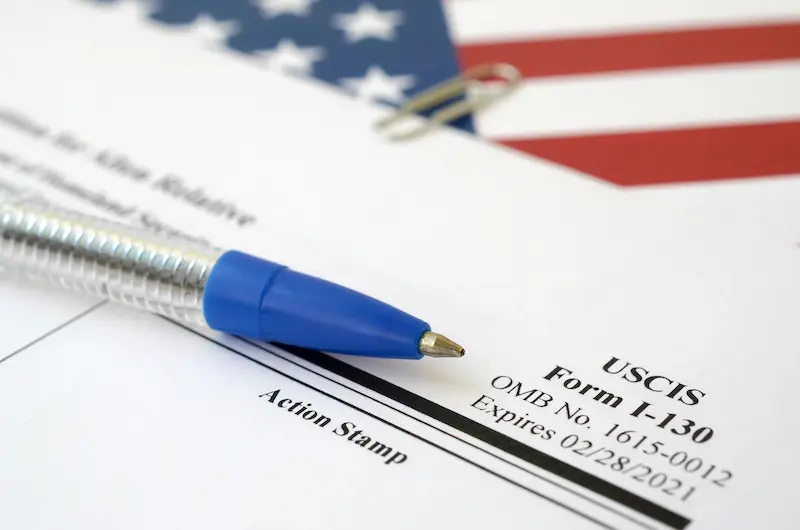
Filling out Form I-130 can feel intimidating, but it follows a clear order. Once you see how the parts fit together, the petition for alien relatives gets much more manageable, and we will walk you through each section in plain language.
What You Need To Gather Before You Start Form I-130
Gather your pieces first, and the form goes faster. You will want proof of your own status, your relative’s biographic details, and your address and employment history for the last five years. Having these ready keeps your answers consistent, which matters more than most people expect.
Part 1: Choosing The Correct Family Relationship
The first part asks who you are petitioning for: a spouse, a parent, a child, or a sibling. Your answer sets the immigrant category for the entire case, so choose carefully and make sure it matches your true relationship.
Part 2: Entering Your Information As The Petitioner
Here you provide your full name, addresses, marital history, employment for the past five years, and immigration status. U.S. citizens complete the citizenship items; permanent residents provide green card details. List your current employer first, and use Part 9 if you run out of space.
Part 3: Completing The Petitioner’s Biographic Information
This short section asks for your ethnicity, race, height, weight, and eye and hair color. It looks minor, but do not leave boxes blank, because an incomplete biographic page is a simple, avoidable reason a petition slows down.
Part 4: Providing Information About The Beneficiary
This is where you describe the relative you are sponsoring: their name, date of birth, addresses, and immigration details such as an I-94 if they are already in the United States. You also indicate where they will finish the process, through adjustment of status inside the country or at a U.S. consulate abroad. Every detail must match your relative’s own documents, down to the spelling of the name.
Part 5: Disclosing Past & Concurrent Petitions
This part asks whether you have ever filed a petition for this person before, and whether you are filing other petitions at the same time. Answer honestly, because USCIS can see your filing history, and an undisclosed prior petition looks far worse than the truth.
Parts 6 Through 8: Signing The Petition & Listing Any Helper
Part 6 is your statement and signature, and you must sign it, because USCIS rejects unsigned petitions outright. Part 7 applies only if an interpreter helped you, and Part 8 only if someone other than you prepared the form. By signing, you certify under penalty of perjury that everything is true, so read every answer once more first.
Part 9: Using The Additional Information Space Correctly
If any answer needed more room than the form allowed, it goes here. Label each entry with the page, part, and item number it belongs to, so the officer knows which question you are continuing.
Why A Spousal Petition Also Requires Form I-130A
If you are petitioning for a husband or wife, you also need Form I-130A, which collects extra background on your spouse and is filed together with the I-130. The names, dates, and addresses on it must match your I-130 exactly, because mismatches between the two forms are a common reason a marriage case gets flagged.
Common Form I-130 Mistakes That Trigger A Request For Evidence
Most I-130 problems come down to a few avoidable slips. A missing signature stops the case before it starts. Inconsistent information between the I-130 and I-130A invites scrutiny. The wrong fee gets the petition rejected. Slow down, check every answer against your documents, and keep a copy of everything you send.
Facing The I-130 & Want A Second Set Of Eyes?
Filling out the form is only part of getting it right, and one small error can cost months. If you would feel steadier having someone review your petition before it goes to USCIS, we are here for that. Schedule a confidential evaluation with Lincoln-Goldfinch Law today, and we will make sure your I-130 is complete, consistent, and ready to file, just as we would for our own family. It only takes a few minutes, and you will leave knowing exactly where you stand. We’ve got your back.
About the Author: Kate Lincoln-Goldfinch


Contact A U.S. Immigration Attorney Today!
Categories
How To Find Us
What Our Clients Say
“This Lawfirm is great, very professional and helpful. I love that they are always in communication and always available for when you have questions . 100% recommended by me and my family. Thank you Lincoln-Goldfinch Law – Abogados de Inmigración”