
The Complete I-130 Documents Checklist By Relationship
TL;DR:
Every Form I-130 needs three things: proof you are a U.S. citizen or permanent resident, proof of your family relationship, and certified English translations of any non-English documents. Marriage cases also need evidence the marriage is real, filed with the petition. The exact documents change depending on whether you are sponsoring a spouse, parent, child, or sibling. Send clear copies, not originals, and a missing document is the most common reason a case gets delayed.
A complete document package is what gets your petition approved without a frustrating Request for Evidence. Most delays come down to a missing piece or a document that does not match the rest, not the form itself. Here is what to gather so you can build a strong package the first time.
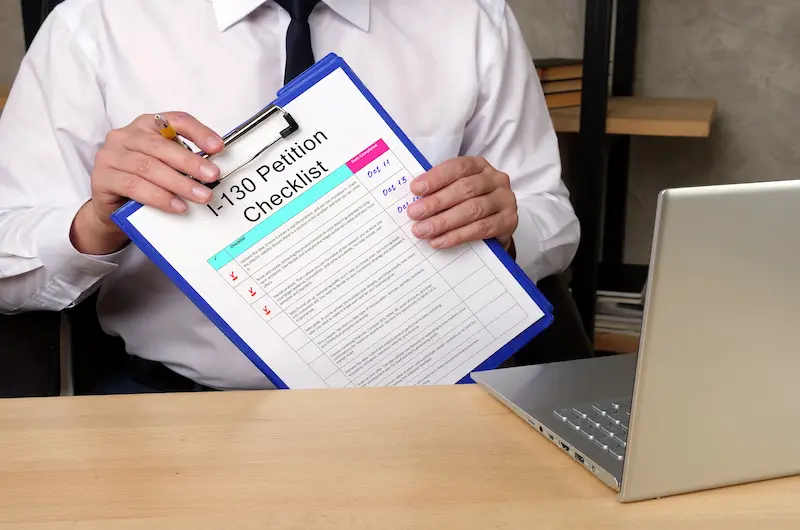
Documents Every I-130 Petition Needs
No matter who you are sponsoring, every petition starts with the same core. You need the current I-130 documents checklist requirements: Form I-130, proof of your own status as the petitioner, and proof of the qualifying relationship. If you are a U.S. citizen, your status proof is a copy of your passport biographic page, U.S. birth certificate, or naturalization certificate. If you are a permanent resident, it is a copy of the front and back of your green card. Only one clear, legible proof is needed, but it must match the name on the rest of your petition.
Certified Translations For Any Non-English Document
Any document not in English must come with a full certified English translation, along with the translator’s signed certification that the translation is complete and accurate and that they are competent to translate. You cannot translate your own documents. Foreign civil records like marriage or birth certificates should be certified copies from the issuing authority, not notarized photocopies, which USCIS generally does not accept.
How To Prove A Bona Fide Marriage For A Spouse Petition
This is where most spousal cases come up short. Your marriage certificate proves you are legally married, but USCIS also wants evidence the marriage is real, and current guidance asks you to submit that evidence with the petition. The strongest proof shows a shared life: joint bank statements, a joint lease or mortgage, joint tax returns, and insurance policies naming each other. Secondary evidence helps too, such as utility bills in both names, photos together across different times, and affidavits from people who know you as a couple. Quality matters more than volume.
Documents To Petition For A Parent
Petitioning for a parent is one of the simpler relationships to document. If you are a U.S. citizen who is at least 21, you provide your own birth certificate showing your name and your parent’s name. If you are petitioning for your father, you also include your parents’ marriage certificate and proof that any prior marriages ended. Parent petitions do not require Form I-130A or photographs of the beneficiary.
Documents To Petition For A Sibling
For a brother or sister, you need birth certificates for both you and your sibling showing at least one shared parent. Depending on the circumstances, such as a shared father or a step or adoptive relationship, you may need additional records. The goal is a clear paper trail connecting you both to the same parent.
Proof You Were Previously Married, If It Applies
If you or your relative were married before, USCIS will not approve the petition until the record shows those marriages legally ended. Include a divorce decree, annulment, or death certificate for each prior marriage, for both spouses. This is a common gap that stalls otherwise strong cases, so do not leave it out.
Certified Translations For Any Non-English Document
Any document not in English must come with a full English translation, along with the translator’s signed certification that the translation is complete and accurate and that they are competent to translate. You cannot translate your own documents. Foreign civil records like marriage or birth certificates should be certified copies from the issuing authority, not notarized photocopies, which USCIS generally does not accept.
Should You Send Originals Or Copies?
Send clear photocopies, not originals, unless USCIS specifically asks for an original. The agency may keep anything you send, so keep your originals safe at home and bring them to your interview in case they are needed. Organize your package by category, label each section clearly, and include a short cover letter listing everything inside, so the officer can review your case smoothly.
Want To Be Sure Your Package Is Complete Before You File?
Gathering the right documents is where a petition is quietly won or lost, and one missing piece can cost you months. If you would feel steadier having someone confirm your package is complete before it goes to USCIS, we are here for that. Schedule a confidential evaluation with Lincoln-Goldfinch Law today, and we will help you build a clean, well-documented petition, just as we would for our own family. It only takes a few minutes, and you will leave knowing exactly where you stand. We’ve got your back
About the Author: Kate Lincoln-Goldfinch


Contact A U.S. Immigration Attorney Today!
Categories
How To Find Us
What Our Clients Say
“This Lawfirm is great, very professional and helpful. I love that they are always in communication and always available for when you have questions . 100% recommended by me and my family. Thank you Lincoln-Goldfinch Law – Abogados de Inmigración”